
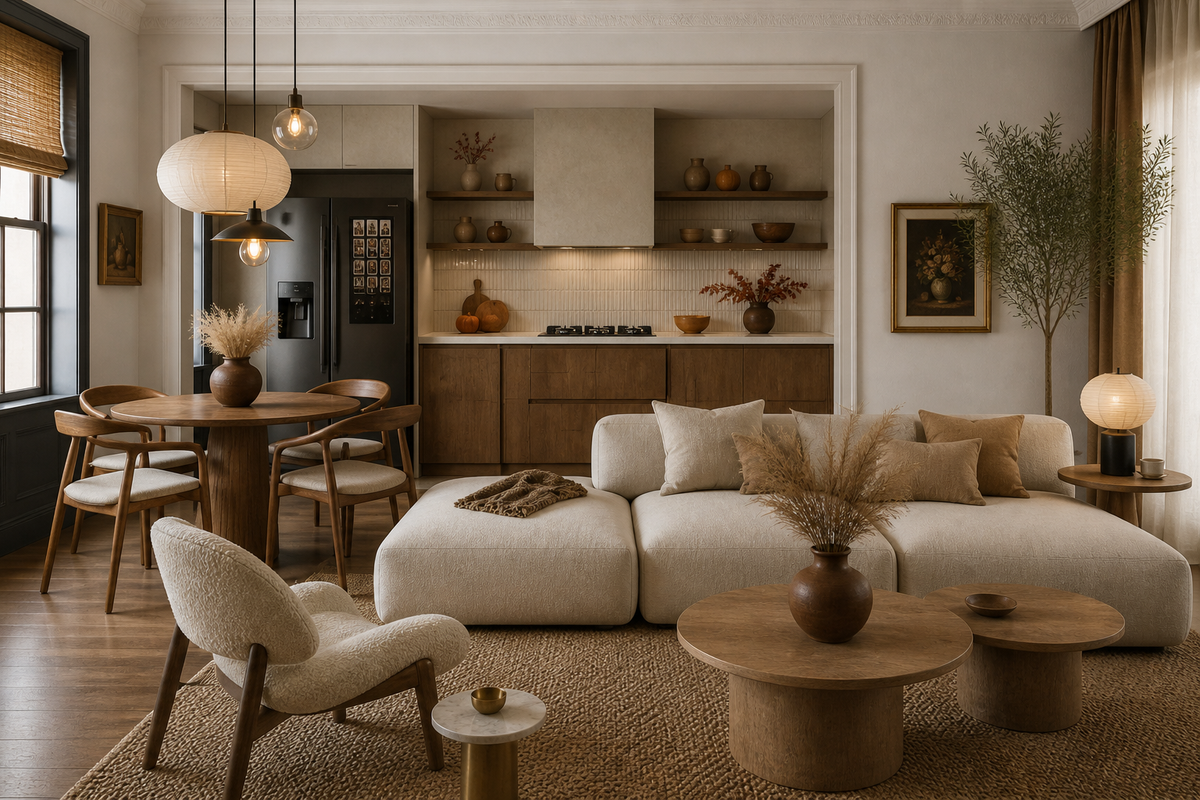
The Japandi aesthetic emerged from a fascinating cultural exchange that began about 150 years ago, when Scandinavian designers first started traveling to Japan after its borders reopened to the world. What they discovered was a philosophy of beauty and living that closely mirrored their own: a deep respect for simplicity, craftsmanship, and the natural world. Over time, this meeting of minds evolved into a harmonious East–West design language that continues to inspire interiors today.
How Japanese and Scandinavian Styles Intertwine
If you’re familiar with Scandinavian interiors, you’ve probably encountered the concept of “hygge”—the Danish notion of comfort, warmth, and contentment. It’s the idea that your home should serve as a cozy refuge, a place that restores calm the moment you step inside. On the other hand, Japanese design embraces “wabi-sabi,” the appreciation of imperfection and transience—the quiet beauty of things that are simple, aged, or irregular.
When these two philosophies meet, they create Japandi: a serene and balanced approach to design rooted in minimalism, natural materials, and emotional well-being. While both styles value functionality and restraint, they complement each other through their subtle differences. Japanese interiors tend to be sleek and refined, while Nordic spaces lean toward the rustic and textured. The warm, earthy tones of Japanese design soften the crisp white palettes of Scandinavian spaces, creating homes that feel both calm and inviting rather than stark or sterile.
Key Characteristics of Japandi
1. Neutral colour scheme
Japandi interiors rely on a foundation of soft, natural hues—think creamy whites, beige, taupe, and light browns. To add depth, layer in warmer tones such as chocolate, clay, or soft greys. This palette creates a quiet backdrop that highlights textures and materials rather than overwhelming the eye.
2. Natural materials
Nature is at the heart of the Japandi philosophy. Use wood, stone, rattan, bamboo, linen, and cotton to bring a sense of authenticity and tactility to your space. Wooden elements—whether oak floors, bamboo lighting, or walnut furniture—add warmth and richness. Textiles like wool or linen create comfort and seasonal versatility without cluttering the look.
3. Organic shapes and soft furnishings
Balance the clean lines typical of minimalism with accessories that introduce curvature and softness. Rounded pottery, asymmetrical mirrors, and plush cushions help offset the structure of modern furniture. A neutral palette can sometimes feel flat, so layering soft furnishings—throws, rugs, and cushions in different textures—adds a sense of depth and coziness. Try pairing a linen sofa with a wool blanket or mixing matte and glossy fabrics for visual interest.
4. Handcrafted and ceramic accents
When styling shelves or tables, prioritise handmade pieces that reflect the wabi-sabi spirit. Clay vases, ceramic tea sets, or stoneware bowls bring a natural yet refined charm. Opt for sustainable or vintage objects when possible—each piece should tell a quiet story and add personality without excess.
5. Meaningful statement pieces
Japandi celebrates the intersection of functionality and beauty. Choose a few statement items that draw the eye—a sculptural chair, a distinctive vase, or a striking artwork—but let negative space do the rest. Mixing curved Scandinavian forms with angular Japanese silhouettes creates visual balance. Edit intentionally: remove what doesn’t serve the space until only essentials remain.
6. Simple and clean lines
Furniture in the Japandi style often sits low to the ground, emphasising openness and calm. Select pieces with simple outlines and thoughtful craftsmanship. Multi-functional items—like benches with hidden storage—maintain the minimalist aesthetic while maximising practicality. Complement these with textured throws or cushions to keep the atmosphere warm and grounded.
Final Thoughts
Ultimately, Japandi isn’t just a design trend—it’s a lifestyle choice that celebrates tranquility, intentionality, and the beauty of restraint. It invites you to slow down, appreciate craftsmanship, and find harmony between nature, function, and form.