
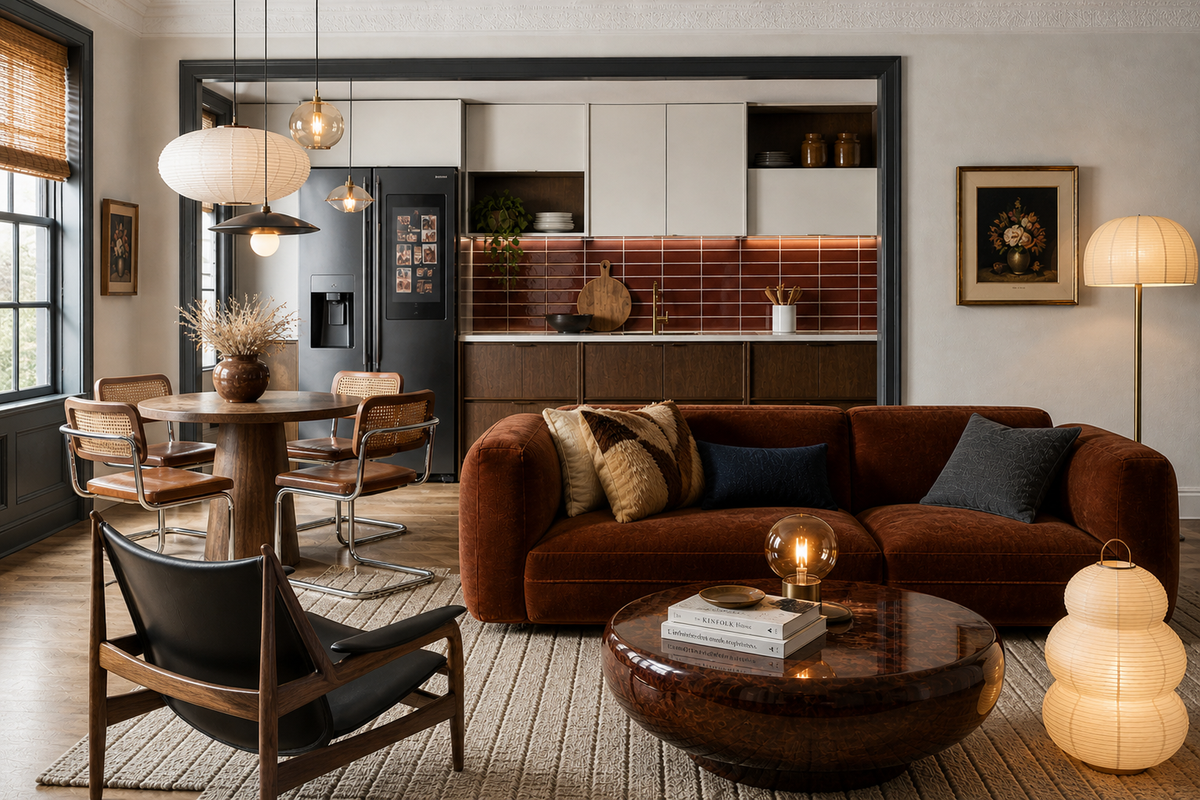
Mid-Century Modern is one of the most iconic and enduring design movements of the 20th century. Emerging after World War II and continuing into the late 1970s, it redefined how people thought about space, form, and functionality. Even today, its influence is unmistakable — seen in contemporary homes, furniture stores, and interior design trends around the world.
This design style is all about simplicity, functionality, and clarity of form. Instead of relying on excessive ornamentation, Mid-Century Modern celebrates clean lines, practical shapes, and the honest use of materials. Warm woods like teak and walnut anchor the look, often balanced with bold accent colours that infuse energy into calm, understated spaces. Patterns are kept minimal, allowing furniture and architectural forms to take centre stage — elegant, purposeful, and effortlessly modern.
The Origins of Mid Century Modern Design
Mid-Century Modern design emerged between the 1930s and 1960s, following the more ornate Art Deco and Victorian periods. In many ways, it was a reaction to the excess of those earlier styles. After World War II, a sense of optimism and prosperity shaped how people lived — homes became more casual, connected to nature, and designed for real life. Architects and designers sought to create uncluttered, functional spaces that reflected this new, modern way of living.
Key Characteristics of Mid-Century Modern
1. Clean, Simple Lines
Mid-Century furniture avoids unnecessary decoration, focusing on sleek silhouettes and balanced geometry. Pieces often feature gentle curves and crisp edges with no elaborate detailing. Think of chairs and tables made from simple, high-quality materials supported by slender, wooden or metal legs — designed for beauty and practicality in equal measure.
2. A Blend of Organic and Geometric Forms
It combines soft, organic curves with sharp, geometric shapes to create spaces that feel both grounded and dynamic. Furniture often appears sculptural, yet approachable — fluid lines meeting purposeful structure.
3. Function Comes First
Every piece serves a purpose. Whether it’s modular shelving, clever storage solutions, or multi-use furniture, functionality is at the heart of Mid-Century Modern design. Aesthetics are never an afterthought, but rather a natural result of thoughtful, problem-solving design.
4. Natural Materials
Teak, walnut, and oak are hallmarks of the Mid-Century look, bringing warmth and depth to interiors. These natural materials are often paired with leather, stone, or woven textiles — creating a tactile, organic feel that contrasts beautifully with sleek metal or glass accents.
5. Earth Tones with Bold Accents
The Mid-Century Modern colour palette perfectly balances earthy calm with vibrant energy. At its base are warm, natural tones — beige, white, gray, and the rich browns of teak or walnut — creating a soothing foundation inspired by nature. Against this neutral backdrop, bold accent colours like mustard yellow, burnt orange, olive green, and deep blue add personality and depth without overwhelming the space.
Originally, Mid-Century homes leaned on simple neutrals, but as the style evolved, designers began experimenting with brighter pops of colour — turquoise, sunny yellow, or vivid blue — to modernise and refresh interiors. The key is intention: choose one or two accent hues and let them stand out through artwork, textiles, or statement furniture pieces.
Mid-Century colour is about harmony rather than contrast. Earthy greens, clay reds, and sea-glass blues tie the indoors to the outdoors, creating a palette that feels organic, timeless, and full of character.
6. Textural Variety and Contrasting Finishes
Think of a walnut table paired with metal dining chairs, or a glass top resting on a sculptural wooden base. The contrast between smooth and rough, matte and glossy, organic and manufactured, keeps the look dynamic yet cohesive.
Natural materials like wood, leather, wool, and stone bring warmth, while manmade finishes — glass, chrome, ceramic, or velvet — add sophistication. Mixing these textures not only reflects the Mid-Century spirit of innovation but also bridges traditional craftsmanship with modern style.
A woven rug beneath a sleek coffee table or a velvet sofa next to a wooden credenza — these small juxtapositions are what make a Mid-Century space feel timeless, inviting, and effortlessly chic.
7. Iconic Furniture Forms
Many furniture designs from this era have become timeless icons — admired for their craftsmanship, comfort, and form. Think of:
- Lounge chairs with matching ottomans designed for both relaxation and style
- Sculptural coffee tables with organic bases
- Minimalist pedestal chairs with smooth, curved seats
- Leather and metal lounge chairs with refined silhouettes
- Dining chairs featuring distinctive split or Y-shaped backs
Each piece embodies the Mid-Century philosophy: design that’s functional, elegant, and enduring.
8. Bold, Sculptural Lighting
Lighting plays a key role in this design movement. Fixtures like Sputnik chandeliers, arc floor lamps, and tripod table lamps do more than illuminate — they act as sculptural focal points. The result is a room that feels vibrant and dynamic, even when the lights are dimmed.
Why Mid-Century Modern Endures
Mid-Century Modern design endures because it perfectly balances form and function, beauty and practicality. Its focus on simplicity, craftsmanship, and timeless materials feels as relevant today as it did decades ago. Whether you live in a sleek city apartment or a cozy suburban home, integrating Mid-Century elements can bring warmth, clarity, and an effortless sense of style to your space.