
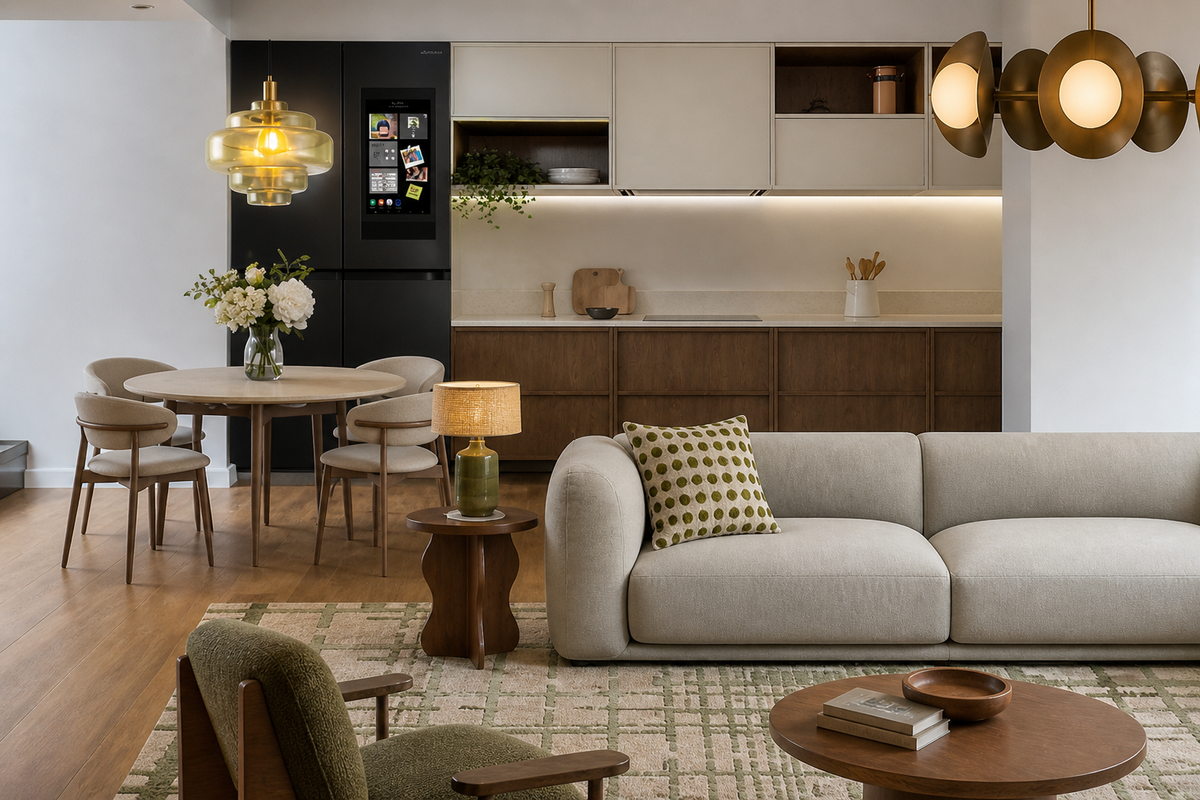
If you’re dreaming about renovating, or simply rethinking your home, chances are an open-plan layout has crossed your mind. It’s easy to understand why. Open living, kitchen, and dining areas feel breezy, modern, and social. They let light travel freely, make family life easier, and help smaller homes feel more generous.
But there’s a catch:
- Without walls, decorating becomes a whole new challenge.
- What looks wonderfully simple on a floor plan can quickly feel unbalanced or cluttered once you start arranging furniture and living in the space.
Below you’ll find the most common mistakes people make in open-plan interiors — plus straightforward ways to avoid them so your home feels cohesive and comfortable rather than chaotic.
1. Forgetting to Create Zones
One of the biggest problems in open-plan homes is treating the entire area as one giant room. When everything blends together, the space loses structure and becomes visually overwhelming.
How to approach it instead:
Start by identifying what needs to happen in the space — cooking, lounging, working, eating, relaxing.
Then, divide the room with subtle “anchors” such as:
- A rug that outlines the living area
- A sectional sofa that subtly divides spaces
- A feature wall or ceiling detail
- A cluster of plants forming a soft boundary
- A console table or open shelving that separates areas without blocking views
These gentle dividers give each activity a place, helping the room feel intentional rather than scattered.
2. Splitting Up Spaces That Should Stay Connected
Another easy mistake is placing the dining and kitchen areas too far apart. It breaks the natural rhythm between cooking, serving, and socialising.
A simple fix:
Keep related functions close together. Even in a large open-plan layout, distance matters. Good flow makes everyday life smoother.
3. Mixing Flooring Types
Using different flooring in one open area tends to chop up the space visually. The room feels smaller, and the sense of continuity disappears.
Better choice:
- Stick to one flooring material throughout.
- Light tones help the room feel bigger and brighter.
If you want each area to feel distinct, use rugs — not separate floors — to define them.
4. Treating Lighting as an Afterthought
Lighting is one of the most powerful tools in interior design, yet it’s often planned too late. That leads to ceiling lights that don’t land where you need them, or switches that control too much at once.
Think in layers:
- General lighting for overall brightness
- Task lighting for cooking, reading, or working
- Accent lighting (wall sconces, LED strips, lamps) to add warmth and character
- Dimmers are a game-changer. They help you shift from bright daytime energy to a soft, evening glow.
Because open-plan rooms have fewer walls, electrical planning requires more intention. If the sofa is in the middle of the room, for example, you might need power outlets in the floor.
5. Believing the Space Is Bigger Than It Really Is
An empty room always looks enormous, until the furniture arrives. Oversized pieces can quickly overcrowd an open-plan layout.
How to avoid this trap:
- Measure before you buy. Make a simple sketch or tape outlines on the floor.
- Choose furniture that fits the true proportions of the room, not what looks good in a huge showroom.
- Comfortable walkways matter just as much as the furniture itself.
6. Pushing Furniture Against the Walls
Many people instinctively place sofas, cabinets, and tables against the walls to “maximise space.” In an open plan, the effect is the opposite — the room feels cold, flat, and emptier than it should.
Try this instead:
- Float the furniture away from the walls.
- Create clusters that feel inviting:
- Sofa + armchairs + coffee table + rug
- Reading nook with a chair and side table
Leave some empty breathing room around your groupings. That negative space is what makes the room feel open, not the empty floor around the walls.
If you’re choosing a new sofa, a low back can help preserve sight lines and keep the room feeling open.
7. Choosing Furniture That Matches Too Perfectly
When everything is the same height, colour, or style, the room can feel stiff and overly coordinated.
A more natural approach:
- Aim for pieces that share one connecting idea, maybe a colour family or material — but vary shapes, heights, and textures.
Let the room feel collected over time, not purchased in one afternoon.
8. Filling the Space with Oversized Furniture
Large furniture can swallow an open-plan layout and block natural pathways.
Practical solution:
- Before buying anything, map it out.
- Choose pieces that allow comfortable circulation.
- Multifunctional furniture — like ottomans that double as seating — is especially helpful in smaller layouts.
9. Ignoring the TV Question Until the End
Open-plan living often reduces the number of available walls. Suddenly, finding a practical spot for the TV becomes a puzzle.
Plan early:
- Your TV placement will likely influence your sofa arrangement.
- If you love the idea of facing the garden while watching TV, make sure the room can support that setup — otherwise you may need to rethink your layout.