
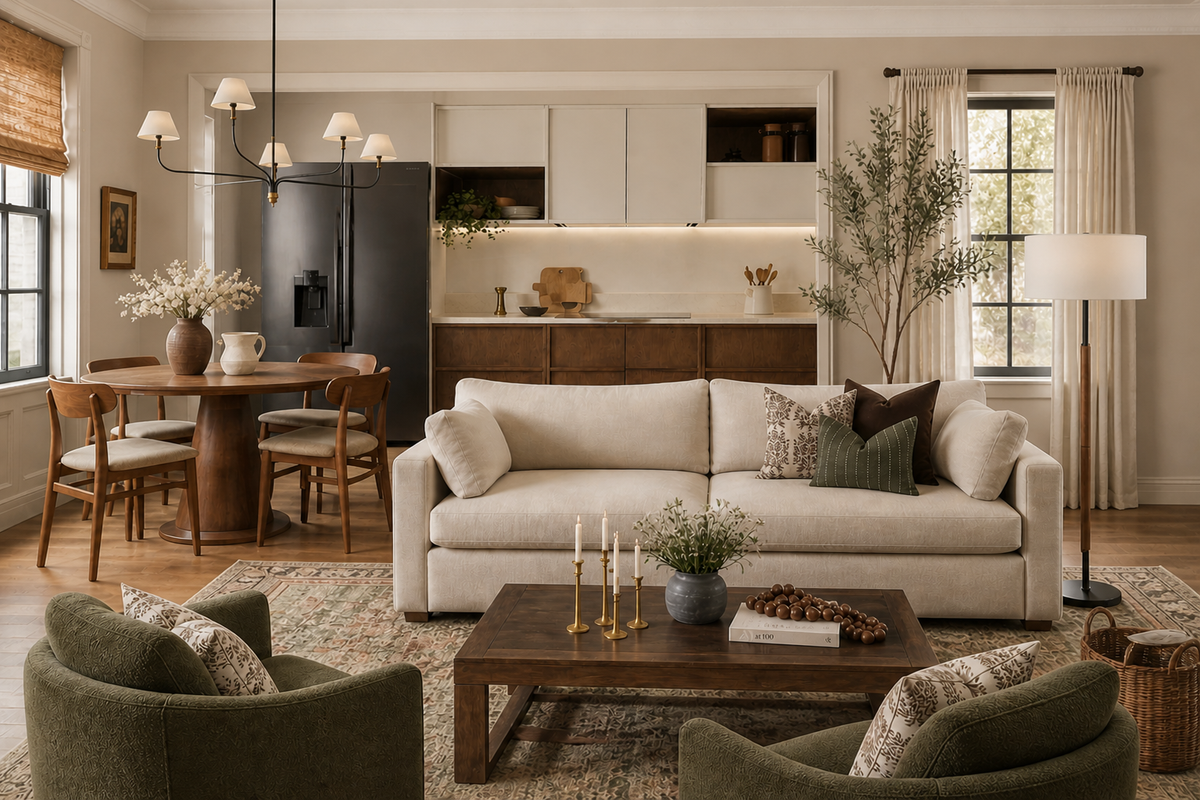
Transitional interior design gracefully bridges the gap between the timeless elegance of traditional style and the clean, minimalist aesthetic of contemporary design. It’s all about balance — that effortless, sophisticated kind of harmony where classic charm meets modern simplicity. The result is a space that feels warm, inviting, and beautifully composed without ever appearing overdone.
What makes this style so appealing is its versatility. Transitional interiors can be tailored to suit a wide range of tastes, seamlessly blending ornate architectural details, soft curves, and classic materials with streamlined furniture, neutral palettes, and open layouts. Unlike traditional design, which leans toward formality and symmetry, or modern design, which often embraces stark minimalism, transitional spaces strike the perfect equilibrium between the two.
By embracing the best of both worlds, transitional design creates environments that feel timeless yet fresh, elegant yet comfortable — a refined expression of balance that never goes out of style.
History of Transitional Design
The story of transitional design is one of evolution rather than invention. Rooted in the refined details of traditional European interiors from the 1700s and 1800s — think chandeliers, ornate mouldings, and patterned rugs — this style later met its modern counterpart during the mid-20th century. As minimalism and midcentury modern aesthetics began to challenge overly decorative spaces, designers sought a middle ground that blended warmth with simplicity. This meeting of two worlds gave rise to what we now know as transitional design — a balance between classic elegance and modern restraint.
By the late 20th century, the trend had taken hold, appealing to homeowners who wanted spaces that felt timeless, sophisticated, and liveable. Today, transitional design remains one of the most enduring and adaptable styles, celebrated for its effortless harmony between the old and the new.
The Key Characteristics of Transitional Design
Transitional interior design has emerged as a timeless approach that bridges the elegance of traditional interiors with the clean lines and simplicity of contemporary aesthetics. It’s a style defined by harmony, subtle sophistication, and versatility, offering the best of both worlds for homeowners who appreciate comfort, beauty, and practicality. If you’re looking to understand what makes transitional design so enduring, let’s explore its defining characteristics in detail.
1. Neutral Colour Palette
At the heart of transitional design is the calming, versatile use of neutral tones. Think soft whites, creamy beiges, warm taupes, and gentle greys — colours that create a serene and sophisticated backdrop. These understated hues allow furniture, artwork, and decorative accents to shine without competing for attention, making the space feel cohesive and thoughtfully curated.
The true beauty of a transitional palette lies in its subtlety. Unlike bolder design styles, transitional interiors emphasise harmony and proportion, where each element contributes to an overall atmosphere of quiet refinement. A neutral foundation also makes layering textures and finishes effortless. Imagine the tactile warmth of natural wood paired with woven fabrics, sleek metals, and stone accents — the result is a space that feels both elegant and approachable, blending organic warmth with modern polish.
2. Strategic Use of Colour
While neutrals dominate, colour still plays a deliberate role in transitional interiors. The goal is not to overwhelm, but to bridge the gap between traditional richness and modern restraint, allowing both aesthetics to coexist gracefully.
Muted, nature-inspired shades often work best: the soft blue-grey of a misty morning, the gentle green of fresh herbs, or the sun-warmed beige of natural stone. These subtle tones modernise traditional elements without disrupting the serenity of the space. Layered with organic textures — linen, wood, and ivory — they create rooms that feel fresh, timeless, and harmonious.
3. Mix of Materials
Transitional design thrives on contrast, blending traditional warmth with contemporary sophistication. Natural materials such as wood, stone, and leather are paired with sleek metals, glass, and smooth fabrics to create interiors that are simultaneously grounded and current.
Texture is critical in a neutral-driven space. Without it, even the most elegant rooms can feel flat or sterile. Layering bouclé upholstery, linen drapes, velvet cushions, and other tactile elements introduces depth and visual interest. For finishes, variety is key: polished marble alongside oak, woven textiles against brushed metals. The goal is effortless balance, where every material contributes to the story of the room.
4. Clean Lines and Minimalism
Clean lines and uncluttered forms are central to transitional design. While the style draws warmth and character from traditional interiors, it equally embraces contemporary simplicity, creating spaces that feel open, balanced, and refined.
Every line has purpose — from the gentle curve of an armchair to the crisp edge of a marble countertop. Repetition of linear forms in furniture silhouettes, architectural details, and subtle seams ties the space together. Lines bridge modern sharpness with timeless craftsmanship, and the interplay of materials — metal with wood, glass with fabric — creates a dialogue between past and present that feels deliberate yet effortless.
5. Layered Lighting
Lighting in transitional interiors is layered and intentional, combining natural light with ambient, task, and accent lighting to create warmth and functionality. Well-placed fixtures highlight textures, architectural features, and key furniture pieces, enhancing the room’s balance and inviting comfort.
Thoughtful lighting choices also serve as design elements. Clean-lined chandeliers, pendant lights, and sconces can introduce subtle modernity, while classic table and floor lamps add timeless charm. Simple, understated fixtures ensure a chic yet approachable feel, complementing both contemporary and traditional elements seamlessly.
6. Mixing Furniture Styles
Combining furniture from different eras is one of the simplest ways to achieve a transitional look. Classic forms coexist with contemporary silhouettes, creating visual interest without feeling chaotic.
For example, a traditional wingback chair upholstered in sleek fabric can complement a modern sofa with clean lines. A classic dining table can be paired with streamlined chairs. The key is to focus on proportion, scale, and materials — finding harmony between seemingly different pieces so the room feels curated and cohesive rather than disjointed.
7. Play with Lines and Silhouettes
Transitional design thrives on the interplay of shapes. Rounded, traditional forms — arched chair backs, sculpted armrests, or elegantly turned legs — work in tandem with sleek, minimalist pieces. This contrast softens rigid lines while adding structure to ornate shapes, producing spaces that feel both elegant and approachable.
8. Rugs as Anchors
In transitional interiors, a rug does more than cover the floor — it grounds the room. Solid or subtly patterned rugs unify the colour palette, provide texture, and create a calm foundation for furniture and decorative elements. Monochromatic tones or natural fibres are ideal, complementing layered textures without overwhelming the space.
9. Consider Architectural Elements
Transitional design often works hand-in-hand with architecture. Exposed beams, hardwood floors, and detailed mouldings provide a traditional canvas for modern updates. By preserving original proportions while introducing contemporary elements — streamlined cabinetry, minimal trim, or crisp finishes — a space can feel both rooted in history and refreshed for today.
10. Balance in Furniture and Décor
Successful transitional interiors require thoughtful curation. Overly ornate or starkly modern pieces can disrupt flow, so the goal is to choose items that share subtle connections — in scale, proportion, or material. This approach ensures a cohesive, intentional, and timeless composition.
Transitional design offers the best of both worlds: the elegance of tradition combined with the simplicity of modernity. Its emphasis on balance, texture, and harmony allows for flexibility in personal style, making it perfect for any space — from living rooms and kitchens to full-home renovations. By blending past and present thoughtfully, transitional interiors create environments that are not only visually striking but also comfortable, welcoming, and enduring.